
Florida Construction Lien Law: What Homeowners Need to Know Before Roofing Work Begins
- 4D Roofing & Restoration

- Jan 14
- 4 min read
If you’re planning a roof repair or replacement in Florida, you may encounter terms like construction lien, Notice of Commencement, Notice to Owner, or lien rights. These concepts can sound intimidating, but they exist to protect both homeowners and contractors when used correctly.
Understanding Florida’s construction lien law can help you avoid surprises, protect your property, and feel confident before any roofing work begins.
This guide explains the basics in plain English.
What Is a Construction Lien in Florida? (Florida Construction Lien Law)
A construction lien (also called a mechanic’s lien) is a legal claim that contractors, subcontractors, or material suppliers can place against a property if they are not paid for work or materials provided.
In Florida, construction liens are governed by Chapter 713 of the Florida Statutes.
Why Construction Lien Laws Exist
Florida’s construction lien laws are intended to:
Protect contractors and suppliers who provide labor and materials
Ensure homeowners are informed about who is working on their property or supplying materials for its improvement.
Create a formal process to resolve payment disputes
Prevent hidden or surprise claims after a project is completed
When executed properly, lien law promotes transparency and accountability on both sides.
What is a Notice of Commencement (NOC)
A notice of commencement is a legal document that is signed and notarized by the home or property owner in advance of a project “commencing”.
In Florida, most construction projects over $2,500 require a Notice of Commencement to be filed with the county before work begins.
The Notice of Commencement identifies:
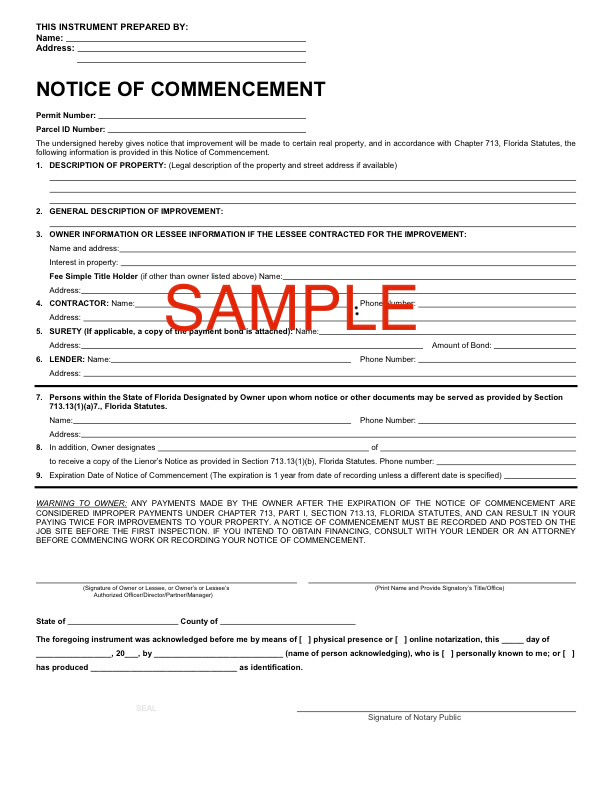
The property owner
The contractor
The project location and scope
Filing the NOC confirms that the owner of the property is aware that construction is happening on their home or property and sets the timeline for lien rights. If it is not filed correctly, inspections can be delayed, financing issues can occur, and lien rights may be affected.
For roofing projects, a reputable contractor will prepare and file the Notice of Commencement as required by law.
This document protects homeowners and contractors alike.
What Is a Notice to Owner (NTO)?
A Notice to Owner is one of the most misunderstood documents in Florida construction.
If you receive one, do not panic. While they are common, they are also used to communicate important information to you as the property owner.
Important facts about a Notice to Owner:
It is not a lien
It does not mean that you owe extra money
It is required by law for certain parties to preserve their lien rights
It is typically sent by subcontractors or material suppliers
The Notice to Owner simply informs you that a company is involved in your project and has the right to file a lien if they are not paid.
Reputable contractors should know if this will be a part of their process, will discuss the details in advance and be sure that you understand it.
Can a Roofing Contractor Lien My Home?
Yes…but only under specific conditions.
For a lien to be valid in Florida:
The contractor or supplier must have provided labor or materials
Proper notices must have been sent on time
Payment must be legitimately owed
Strict statutory deadlines must be followed
A lien cannot be filed arbitrarily or without cause.
At 4D Roofing & Restoration, our goal is simple: complete the work correctly, communicate clearly, and eliminate the conditions that would ever lead to lien disputes.
How Homeowners Can Protect Themselves (Best Practices)
Work with a licensed, insured Florida roofing contractor
Review your contract carefully
Understanding the payment schedule
Request lien releases when appropriate
Keeping copies of all notices and documents
Document deposits and progress payments
A professional contractor should proactively guide you through this process, not avoid the conversation.
If you don’t understand the documents, or you feel uneasy… it’s a good idea to consult with an attorney.
Contraction and Consumer Trade associations like the Florida Roofing and Sheet Metal Contractors Association (FRSA), your local BBB or even a county Legal Aid office may be able to review your documents at little or no cost.
What Is a Lien Release?
A lien release is a document that confirms a contractor or supplier has been paid and waives (releases) their right to file a lien for that portion of the work or material supplied.
There are different types of lien waivers in Florida, including:
Partial release
Final release
Conditional release
Unconditional release
Used correctly, lien releases provide peace of mind and clear documentation that payments are being handled properly.
Why Transparent Contractors Talk About Lien Law
If a contractor avoids or discourages questions surrounding lien laws, that is a red flag.
Reputable roofing companies:
Understand Florida lien statutes
Follow notice and payment rules strictly
Communicate openly with homeowners
Structure payments to protect both parties
Transparency is a sign of professionalism.
Final Thoughts for Florida Homeowners
Florida construction lien law is not something to fear, but it is important to understand.
When you work with a reputable roofing contractor, lien law functions exactly as intended: as a safeguard, not a threat.
If you have questions about notices, payments, or how lien law applies to your specific roofing project, ask before work begins. An experienced contractor should welcome that conversation.
At 4D Roofing & Restoration we go to great lengths to ensure that our customers understand the laws surrounding their particular project, what we do to keep their project in line with statutory requirements, and most importantly to make absolutely certain that they are comfortable and confident throughout the process.
If you have questions about how we handle lien rights, notices and other legal instruments, we’d be happy to go over the details.
Call us anytime!
4D Roofing & Restoration
407.205.2585

Comments